Losing someone you love is hard enough. Now you are also responsible for settling their estate, and you may have no idea where to start. That is a lot to carry, especially while you are grieving.
You do not have to carry it alone.
Estate administration is the legal process of gathering a person’s assets, paying their debts, and passing what is left to the right people. If your loved one left a will or a trust, or left no plan at all, North Carolina law sets out specific steps you have to follow. Get them wrong, and it can cost your family time, money, and added stress at the worst possible moment.
The estate administration attorneys at Carolina Family Estate Planning help executors, administrators, and trustees handle this process from beginning to end. We take care of the legal work so you can take care of your family.
Call 919-443-3035 or schedule a Discovery Call with our team. A Discovery Call is a focused conversation where we learn about the estate and map out your next steps. There is no pressure and no obligation.
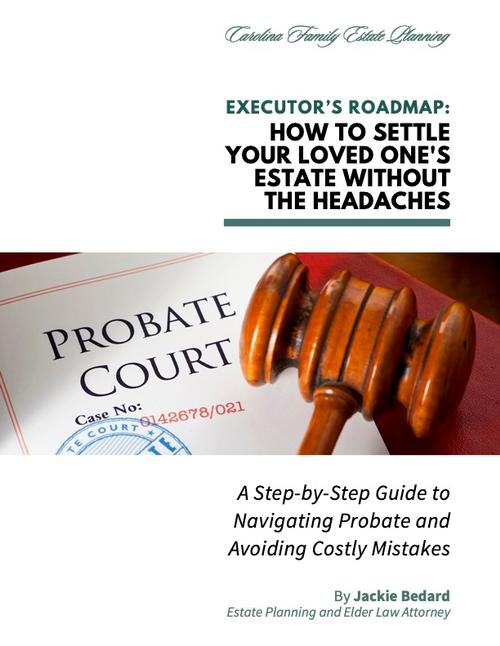
Not ready to talk yet? Download our free Executor’s Roadmap, a plain-English guide to settling an estate in North Carolina.
What Is Probate and Estate Administration in North Carolina?
People use these two words as if they mean the same thing. They are related, but they are not identical.
Probate is the court-supervised process of proving a will is valid, appointing the executor, and making sure the will is carried out the way it was written.
Estate administration is the bigger picture: the full process of settling a person’s affairs after they die. It includes gathering assets, notifying creditors, paying debts and taxes, and passing what remains to the heirs or beneficiaries.
If your loved one had a will, estate administration includes probate. If there was no will, the court appoints an administrator and the estate is settled under North Carolina’s intestacy laws, which decide who inherits. Either way, the work is similar and the legal requirements are real.
When Is Probate Required in North Carolina?
Not every estate has to go through probate. It comes down to what your loved one owned and how those assets were titled.
Probate is usually required when the person owned something in their name alone, such as a house, a bank account, or a vehicle with no named beneficiary or joint owner.
Probate may not be required when everything passed automatically: assets held jointly, accounts with a named beneficiary, or property held in a trust. For smaller estates, North Carolina also offers simplified small estate filings that can sometimes avoid the full process.
Here is what catches families off guard. Even when probate looks avoidable, an overlooked asset can pull the whole estate into the court process. A bank account with no beneficiary. A rental property still in one person’s name. Cryptocurrency or other digital assets. One missed detail is all it takes, which is why it pays to confirm before you assume probate does not apply.
How the Probate Process Works in North Carolina
The exact timeline depends on the size and complexity of the estate, but the process generally follows these steps:
- File with the Clerk of Court. The executor files the will, if there is one, and opens the estate in the county where the person lived.
- Get appointed. The court formally appoints the executor (if there is a will) or an administrator (if there is none) and gives them legal authority to act.
- Notify heirs and creditors. The executor notifies the heirs and publishes a legal notice so creditors can come forward.
- Inventory the assets. The executor files a complete inventory of the estate with the court.
- Pay debts and taxes. Valid debts, expenses, and any taxes are paid from estate funds before anyone receives an inheritance.
- Distribute what remains. Once debts are settled and the court signs off, the remaining assets go to the heirs.
- File the final accounting. The executor files a final report showing the court exactly how the estate was handled.
Most estates in North Carolina take between 9 and 18 months to settle, though how long probate takes depends on the estate. Simpler estates can move faster. Complicated ones, such as estates with out-of-state property, tax issues, or family disputes, can take years.
What Does an Executor or Personal Representative Do in North Carolina?
If you were named executor, you have a real legal job, not just a title. North Carolina law calls it a fiduciary duty, which is a legal way of saying you are required to act in the best interests of the estate and everyone who inherits from it, not in your own interest.
In practice, that means you are responsible for:
- Finding and securing everything the estate owns
- Notifying banks, financial companies, and government agencies of the death
- Protecting and managing estate property until it is distributed
- Paying valid debts, bills, and expenses from estate funds
- Filing the final tax returns, and an estate tax return if one is required
- Distributing assets to the right people, in the right shares
- Keeping careful records of every decision and dollar
- Reporting to the court when required
It is a long list, and the law expects you to get it right.
Executor vs. Administrator: What’s the Difference?
An executor is the person named in the will to settle the estate. An administrator is appointed by the court when there is no will, or when the named executor cannot serve. The job and the legal duties are the same. The only difference is how the person ends up in the role.
What Happens If an Executor Makes a Mistake?
This is the part most people are not warned about: an executor can be held personally responsible for mistakes. That can mean paying out of your own pocket to make the estate whole.
The most common ways executors get into trouble:
- Handing out inheritances before all debts and taxes are paid
- Failing to notify a creditor they knew about
- Mismanaging estate money or property
- Favoring one beneficiary over the others
- Missing a legal deadline
- Mixing estate funds with personal funds
If a beneficiary, a creditor, or the court believes an executor handled the estate improperly, that executor can be ordered to repay the estate themselves.
This is why so many executors bring in an attorney. The rules are detailed, the deadlines are firm, and the stakes are personal. Someone who handles estate administration every day can spot these problems before they turn into liability.
Trust Administration in North Carolina
If your loved one set up a trust as part of their estate planning in North Carolina, the process looks different from probate. A trust that was properly funded usually stays out of court. Instead, the successor trustee named in the trust document steps in to manage it.
What Does a Successor Trustee Do?
- Notifies the beneficiaries that the trust is now active
- Gathers and manages the trust’s assets
- Pays any outstanding debts and expenses
- Distributes assets according to the trust’s instructions
- Files the required tax returns for the trust
- Keeps clear records and provides accountings to the beneficiaries
Why Trust Administration Can Still Get Complicated
People often assume that because a trust avoids probate, settling it is simple. That is not always true. The common complications:
- Assets that were never properly moved into the trust, which may still require probate
- Trust instructions that are unclear or out of date
- Beneficiaries who disagree about how distributions should work
- Tax situations that get complex, especially with larger estates
- Real estate in more than one state
A trustee carries the same fiduciary duty as an executor, and the same personal liability if assets are mishandled. This is also where careful asset protection planning during the original plan pays off. Working with an attorney who handles trust administration helps you do the job correctly and protects you while you do it.
When an Estate Isn’t Straightforward
Most estates settle without a fight. Some do not. Disagreements among family members, unclear documents, and unexpected situations can all make administration harder.
Here is how our role works in those situations. We represent the fiduciary, meaning the executor, administrator, or successor trustee, in settling the estate. If you are serving in that role and dealing with difficult beneficiaries, conflicting documents, or pressure from other parties, we help you carry out your legal duties correctly and protect yourself from liability.
Some matters, such as a formal will contest, call for a different kind of attorney. If that comes up, we will point you toward the right person for that specific fight. Meanwhile, the estate still has to be administered, and that is the part we stay focused on with you.
How Carolina Family Estate Planning Makes This Easier
You are dealing with enough. Here is what working with us actually looks like:
- You reach out. Call us or book a Discovery Call online. The first person you talk with is a Client Welcome Specialist, who listens to your situation and helps you figure out the right starting point.
- We have a Discovery Call. We walk through your loved one’s assets, the documents you have, and what is worrying you. Then we lay out a clear plan for settling the estate.
- We handle the legal work. We prepare the paperwork, deal with the court, communicate with beneficiaries and creditors, and manage the process from start to finish.
- We keep you updated. You hear from us at every stage, and we make sure your questions are answered before you leave any meeting.
Our goal is simple: settle your loved one’s estate correctly, with as little stress on you as possible, while honoring their wishes.
What Makes Us Different
- This is what we do. We focus exclusively on estate planning and administration. We are not a general practice firm that dabbles in everything.
- We speak plain English. No jargon, no talking down to you. You will understand each step before we take it.
- We make it predictable. You will know what to expect, roughly how long it will take, and how our billing works.
- We help you avoid personal liability. We keep executors and trustees clear of the mistakes that lead to legal exposure.
- We have done this since 2009. We know the courts, the process, and the pitfalls that trip families up.
Ready to start? Call 919-443-3035 or schedule your Discovery Call.
Want a roadmap first? Download our free step-by-step Executor’s Roadmap for settling an estate in North Carolina.
Frequently Asked Questions About Estate Administration in North Carolina
Do all estates have to go through probate in North Carolina?
No. Probate is only required for assets owned in the deceased person’s name alone. Assets held in a trust, assets owned jointly, and accounts with a named beneficiary generally pass outside of probate. That said, many families discover that at least some assets still require probate, even when they expected to skip it entirely.
What is the difference between probate and estate administration?
Probate is the court process of proving a will and appointing an executor. Estate administration is the broader job of settling the whole estate: gathering assets, paying debts, and distributing what remains. If there is a will, estate administration includes probate. If there is no will, the estate is still administered, just under North Carolina’s intestacy laws instead of a will.
How long does probate take in North Carolina?
Most estates take 9 to 18 months to settle. Small, simple estates with no disputes can finish faster. Complex estates with out-of-state real estate, tax issues, or family disagreements can take significantly longer, sometimes years.
How much does estate administration cost in North Carolina?
It depends on the estate. The number and type of assets, whether real estate has to be sold, whether tax returns are required, and whether there are disputes all affect the cost. We bill estate administration work hourly, and we assign tasks to the lowest-cost qualified team member to keep your bill down. On your Discovery Call, we will explain how our billing works and what tends to drive cost, so there are no surprises.
Will the executor get paid?
North Carolina law allows executors and administrators to receive reasonable compensation, and the court can approve up to 5% of estate receipts and disbursements. But taking a commission is not always the right move. Tax treatment, the size of the estate, and your relationship to the other beneficiaries all factor in. We help our clients think this through and decide what makes sense.
What if the original will can’t be found?
If the signed original cannot be located, North Carolina law generally presumes the person revoked it. A copy can sometimes be admitted under specific circumstances, but it is harder. If no will can be proven, the estate is settled as if there were none, and the intestacy laws decide who inherits.
What happens if someone dies without a will in North Carolina?
The estate is settled under North Carolina’s intestacy laws, which set out who inherits based on the surviving family. The court appoints an administrator to manage it. Because there is no document spelling out the person’s wishes, the law, not the family, decides where the assets go.
Can I handle estate administration without a lawyer?
You can. But the requirements are detailed, the deadlines are strict, and a mistake can fall back on you personally. Most executors find that working with an estate administration attorney saves time, lowers stress, and protects them from liability, and that the cost of help is far less than the cost of a serious error.
Serving Families Across the Triangle
Carolina Family Estate Planning is based in Cary, North Carolina, and we help executors, administrators, and trustees throughout the Triangle, including Raleigh, Durham, Chapel Hill, Apex, Holly Springs, Morrisville, Fuquay-Varina, Wake Forest, Clayton, and the surrounding communities. If your loved one lived in North Carolina or owned property here, we can help, even if you live out of state.
Call 919-443-3035 or schedule a Discovery Call to talk through your situation.